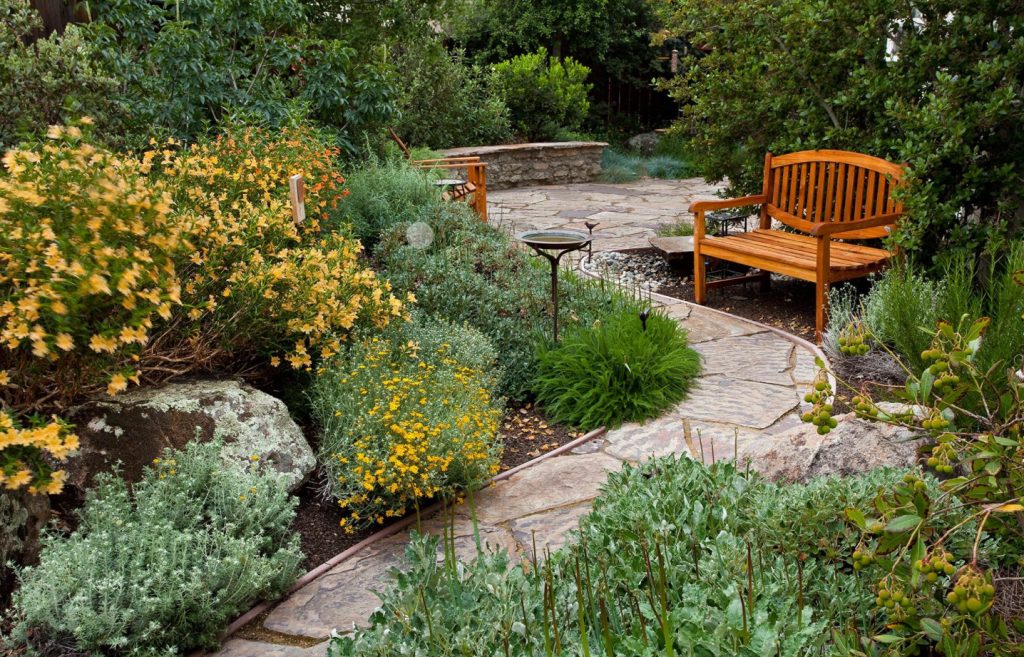
Have you ever thought, “Why does my ‘perfect lawn’ feel so lifeless even after so much care & maintenance?” You may be doing all the tricks and techniques to beautify the nooks & corners, but still you feel that your landscape feels artificial instead of natural and calming.
Well, yes, it happens sometimes. But unfortunately, homeowners couldn’t understand the reason. They don’t want a lush green lawn, as they see in glossy magazines. All they want is a place where butterflies drift through wildflowers and birds choose to stay awhile. Homeowners actually feel that pull without knowing how to explain. They just know that their space could feel… a little better!
But how? Let us tell you. You may be implementing all the right techniques to make your outdoor space better, but perhaps you are missing out on a properly designed native landscape?
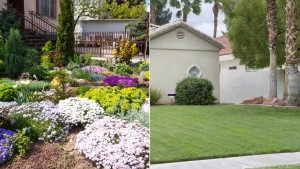
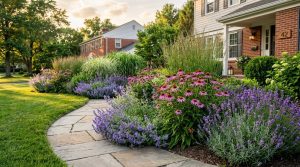
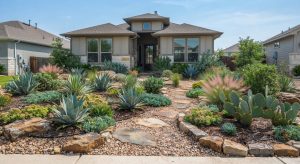
We know you must be thinking that native landscapes look messy and dull. But, when designed thoughtfully, they can feel elegant and more visually stunning than a simple lawn could be. So, the difference is not in your plants or your strategies; it’s the design! Today, we are going to help you with native garden design, like how to design a native plant landscape.
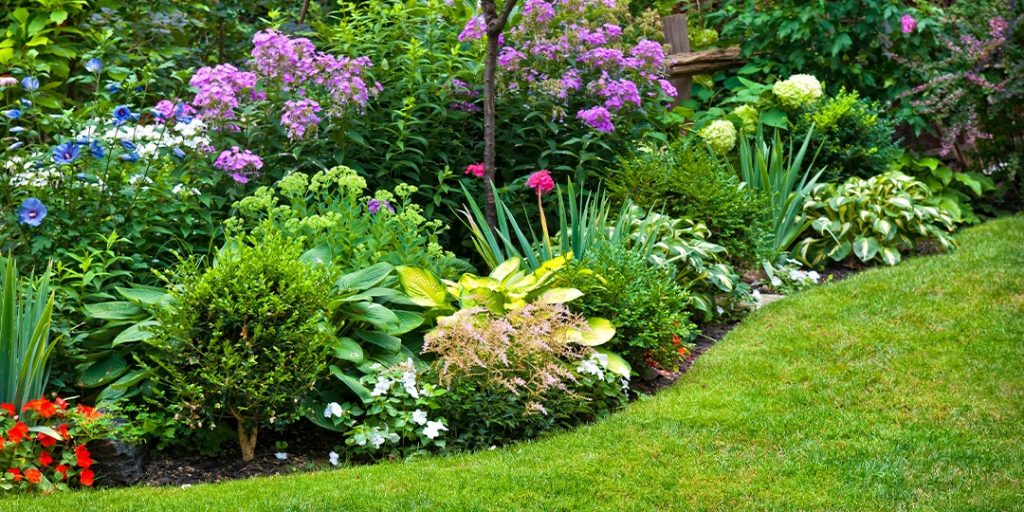
Why Native Plant Landscaping is Growing Faster?
You may feel surprised to know that native landscaping has not just become a design preference, but it’s a shift in how homeowners think about landscaping. Instead of those big, lush, and high-maintenance lawns, people are now choosing native landscaping that looks so calm and feels closer to nature.
We think that this movement is growing faster because of:
-
Drought Resistance
Drought resistance needs much less watering once it’s established. It survives dry spells efficiently & naturally and adapts to local rainfall patterns.
Plus, it reduces dependence on irrigation systems.
-
Pollinator Support
Native landscaping attracts bees, butterflies, and birds. They provide natural food resources like nectar and seeds and create safe habitats for pollinators.
Moreover, it incredibly supports declining insect populations.
-
Lower Maintenance
Another incredible reason why it’s getting popular is that native landscaping requires less mowing compared to lawns. There are fewer pests and disease-related issues, and a reduced need for replanting.
-
Climate Resilience
The approach handles temperature changes much better. It adapts to seasonal changes naturally and performs well in local soil conditions.
The good thing is that it recovers faster after weather stress.
-
Better Biodiversity
Native landscaping supports a wider range of plant life. It encourages beneficial insects and attracts native bird species. Above all, it strengthens local ecosystems and creates a balanced outdoor environment.
-
Lawn Replacement Trend
Homeowners are now moving away from grass trends. They are more interested in eco-friendly landscaping today, as it reduces water and maintenance costs as well as looks more visually appealing than flat lawns.
Steps for Native Landscape Design
Here are a few steps for native plant landscape design so you can understand fully about how to design a native plant garden.
Step 1 – Understand Your Yard Conditions
Before you pick plants for your yard, try to understand what your yard actually tells you. So, get a clear picture of your existing yard conditions and analyze:
-
Sun vs shade areas
Note which spots get full sun or full shade.
-
Soil type
Identify if your soil is sandy, clay, or loamy.
-
Drainage
See how fast water drains after rain or if it pools anywhere.
-
Moisture zones
Mark areas that stay naturally wet or dry.
-
Existing trees
Consider mature trees and their shade and root impact.
-
HOA or neighborhood rules
Check any landscape restrictions or planting guidelines.
Step 2 – Choose the Right Native Plant for Your Region
For low-maintenance native landscaping, it’s important to choose the right plants for your region.
-
Local ecotype plants
Use plants naturally found in your exact area.
-
State native plant database
Check local guides for the best plant matches.
-
Avoid invasive ornamentals
Do not plant intrusive, non-native species.
-
Mix bloom seasons
Choose plants that flower at different times․
Step 3 – Use the 5-Layer Landscape Method
A good native landscape has layers, just like a natural ecosystem, and the result is a much more attractive landscape to enjoy all year round.
-
Canopy Trees
Tall trees can be used for framing and shading․
-
Understory Trees / Shrubs
Medium-height plants give shape, privacy, and depth.
-
Perennials / Flowers
Seasonally blooming plants bring color to the garden․
-
Native Grasses
Add movement, texture, and a flowing, natural appearance.
-
Groundcovers
Low-growing plants that fill bare spots and suppress weeds․
So, if you are looking for a front yard native plant landscape design, then do not skip this step, as it can be a game-changer in the long run.
Step 4 – Create a Beautiful Layout
You know what? Your one simple design choice can make your yard look more polished and intentional. Especially when you follow these design principles:
-
Plant in drifts/groups
Cluster similar plants together for a natural flow.
-
Repeat colors
Reuse a few colors to create visual harmony.
-
Mix textures
Combine soft grasses, bold leaves, and flowers.
-
Tallest plants placement
Keep the tallest plants at the back or center.
-
Paths and borders
Add simple walkways and clear planting edges.
-
Mulch edges
Use mulch to define beds and reduce weeds.
-
Clean lines = intentional look
Neat edges make the design feel planned, not messy.
Step 5 – Plan for 4-Season Color
Another interesting fact is that good native landscaping doesn’t peak in just one season. It stays beautiful all year round.
-
Spring blooms
Early flowers bring fresh color after winter.
-
Summer pollinators
Peak flowering plants attract bees and butterflies.
-
Fall grasses + seed heads
Warm tones and textures take over as flowers fade.
-
Winter structure + berries
Grasses, shrubs, and berries add shape and life in colder months.
Step 6 – Replace Lawn in Phases
Remember, whenever you switch from a traditional lawn to a native one, keep the process slow and steady. It will help you establish plants successfully.
-
Remove grass in sections
Start small. Take out the grass in sections to keep control of the process.
-
Start with one bed
Start with one area to test your design
-
Expand yearly
Expand yearly and see what works before
-
Easier budget approach
Complete the project in phases and spread the cost over time.
Step 7 – Add Wildlife Features
Let’s be honest – a native landscape is incomplete without wildlife. It simply turns your yard into a living, breathing ecosystem. You can add water, shelter, and natural food resources and invite pollinators to stay and thrive. Some important wildlife features can be the following:
- Bird bath
- Bee nesting spots
- Leaf litter
- Log
- Rocks
- Host plants for butterflies
These steps are not so difficult to follow. But unfortunately, that’s where most homeowners get stuck. But don’t worry, Native Plant Landscaping can simplify the process for you and help you create a balanced design that exactly fits your yard conditions.
Native Plant Landscape Design Ideas by Yard Type
If you want to design the best layout for a native plant garden, then you can also implement some DIY native plant landscape design types by understanding your yard type.
-
Small front yard
Use compact plants with clean, defined edges.
-
Large backyard
Add layers for depth and a natural feel.
-
Side yard
Keep it simple with pathways and low plants.
-
Sloped yard
Use deep-rooted plants to control erosion.
-
Dry yard
Go with drought-tolerant native plants.
-
Rain garden area
Use water-loving plants to handle runoff.
Common Native Landscape Mistakes to Avoid
If you want native curb appeal landscaping, then make sure you avoid these mistakes at any cost:
- Choosing the wrong sun plants
- Random spacing
- Too many species
- No structure plants
- Neglecting 1-year watering
- No edging = messy look
- Expecting instant results
- Skipping pollinator garden design ideas
Native Landscape Maintenance Schedule
Let’s have a quick overview to check the first- and second-year maintenance schedule:
| Task | Year 1 (establishment) | Year 2+ (established) |
| Watering | Regular, deep watering | Minimal, only during drought |
| Weeding | Frequent removal needed | Occasional touch-ups |
| Pruning | Light shaping if required | Seasonal pruning |
| Fertilizing | Rarely needed | Usually not required |
| Plant growth | Slow to moderate | Fuller, self-sustaining |
| Overall care | More hands-on | Low maintenance |
Before and After – What to Expect in 3 Years?
Remember: patience is key in native landscaping. You can’t expect faster and outstanding growth in the first year. But by year three, you will see a fully thriving ecosystem.
So, think of it as a long-term investment and expect to see a more balanced, established, and easy-to-maintain yard every season.
However, before you disappoint in the very first year of growth, have a look at this quick overview and timeline comparison.
-
Year 1
Focus on establishment—plants are small and need care
-
Year 2:
Notice fuller growth and better plant spread
-
Year 3:
The landscape looks mature, dense, and mostly self-sustaining
Timeline comparison:
| Stage | What it looks like | What to expect |
| Year 1 | Sparse, newly planted | Regular watering, more weeding, slow growth |
| Year 2 | Filling in, more balanced | Less maintenance, plants spread naturally |
| Year 3 | Full, lush, layered | Low maintenance, stable, and self-sustaining |
With regular care & maintenance, your native plants automatically grow into their space and create a rich landscape over the years.
Frequently Asked Questions
-
Do native plants look messy?
No, not at all. They only look messy when they are poorly planned and neglected. With good design and maintenance, they look beautiful and more balanced.
-
Are native plants lower maintenance?
Absolutely. And that’s one of their great qualities. They need less watering, mowing, and overall care as compared to traditional lawns.
-
Can I replace my lawn with native plants?
Of course, you can. But you should gradually replace your lawn with native plants and start with small sections.
-
How do I choose native plants for my area?
It’s easy. Choose native plants by matching them to your yard conditions and ensuring they fit your sun, soil, and water conditions.
-
How long does a native garden take to establish?
Usually, most native gardens take 2-3 years to fully establish. And after that, they look fully mature, self-sustained, and stable.
-
Do native plants attract snakes or pests?
Not exactly. Native plants attract wildlife. They only attract snakes or pests when there is a suitable cover or an imbalance in the space.
-
Can native landscaping increase home value?
Yes. Native landscaping attracts buyers because it is visually stunning and requires low upkeep.
Ready to Design a Four-Season Native Garden Design?
Designing a native landscape is not just about “perfection.” It’s more about creating a space that grows naturally and gradually transforms into a rich and sustainable environment.
There’s only one takeaway: do not rush the process. If you are new to this and not sure how to do it, you can study a native landscape plan for beginners or just reach out to the professionals of Native Plant Landscaping to get help and build a landscape that’s both attractive and sustainable.
Remember, once it’s fully established, it becomes the most valuable and rewarding part of your home.