Native Landscaping, Xeriscaping & Low-Maintenance Landscaping in Richland, WA
A good landscape should fit the place where it is planted. In Richland, that means taking the hot, dry summers, limited rainfall, soil conditions, and water needs of the Columbia Basin into account from the beginning.
Landscaping That Fits the Richland Environment
Richland has a very different growing environment from the wetter parts of Washington. Summers are hot and dry, and natural rainfall is limited.
That matters when choosing plants.
Instead of selecting plants simply because they look good in a garden center, we look at whether they are appropriate for the conditions where they will actually grow.
Our landscaping work centers around three approaches:
- Native plant landscaping using plants suited to the Columbia Basin
- Xeriscape landscaping with a focus on efficient water use
- Low-maintenance landscaping designed to reduce unnecessary yard work
These approaches can be used separately, but they often work even better when combined.
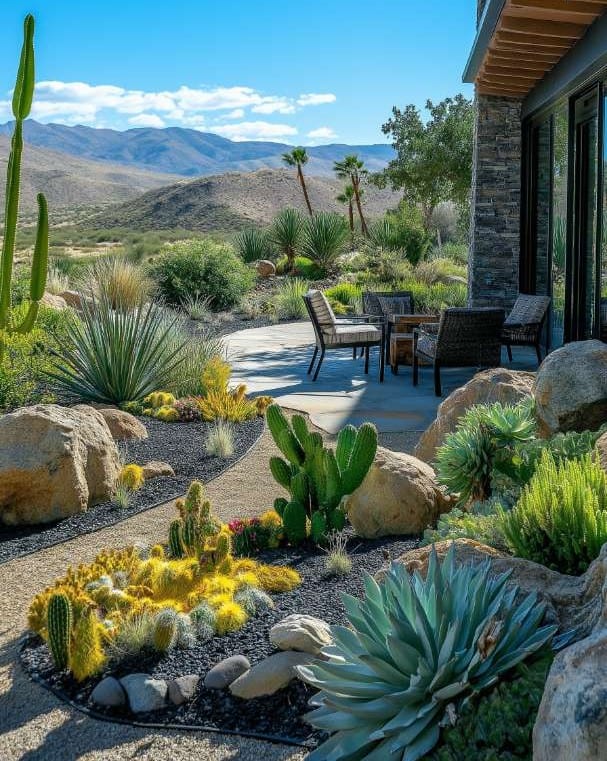
Native Plant Landscaping in the Richland
Native plants can bring a very different character to a Richland yard.
Rather than trying to recreate the type of landscape found in a wetter climate, native landscaping uses plants that are better connected to the natural environment of the region.
This can include native trees, shrubs, grasses, flowering plants, and other species selected according to the conditions of your property.
A native landscape can be simple and clean or more natural in appearance. It can include defined beds, paths, open areas, rock features, and carefully arranged groups of plants.
It does not have to look like an untouched piece of land.
With thoughtful design, native plants can create a polished landscape that still feels connected to the Columbia Basin.
Native landscaping can be a good option if you want to:
- Replace part of a traditional lawn
- Reduce the amount of irrigation your landscape needs
- Add plants that are suited to the local environment
- Create habitat for birds and pollinators
- Bring more seasonal interest to your yard
- Reduce ongoing landscape work
- Create a landscape with a stronger sense of place
Xeriscape Landscaping in Richland
Richland’s dry climate makes water use an important part of landscape planning.
Xeriscaping focuses on reducing unnecessary outdoor water use through careful design and plant selection. Instead of treating irrigation as the solution to every plant’s needs, the landscape is planned around plants and features that can work with available water.
Call Us
(509) 380-6410
- Drought-tolerant plants
- Native grasses and flowering plants
- Trees and shrubs suited to dry conditions
- Gravel and stone
- Mulch and ground covers
- Efficient irrigation in areas where it is needed
- Smaller areas of turf
The exact combination depends on the property.
A common misconception is that xeriscaping means choosing between a lawn and a yard full of rocks. In reality, there is a lot of room between those two options.
A well-designed xeriscape can have flowers, shade trees, texture, seasonal color, and comfortable spaces for spending time outdoors.
Low-Maintenance Landscaping for Richland Homeowners
Your landscape should not require all of your free time.
A traditional lawn and garden can involve frequent mowing, trimming, watering, pruning, fertilizing, and weed control. If you have a busy schedule, keeping up with all of that can become frustrating.
Low-maintenance landscaping looks at how the landscape can be designed to reduce those demands.
This starts with choosing plants that fit the site.
We can also look at how much lawn you actually need, where irrigation is necessary, which areas are difficult to maintain, and which plants are likely to create extra work as they grow.
- Less turf
- Native and drought-tolerant plants
- Easier-to-manage planting areas
- Ground covers
- Natural mulch or rock
- Plants selected for their mature size
- Irrigation designed around actual plant needs
Every Richland Property Is Different
Two homes on the same street can have very different landscaping needs.
One may have full sun and sandy soil. Another may have shaded areas, compacted soil, drainage concerns, or established trees.
The way you use the property also matters.
A family with children or pets may want open space for recreation. Another homeowner may prefer more planting areas and less lawn. Someone else may want a landscape that attracts birds and pollinators.
We take these factors into account when planning a landscape.
- Sun and shade
- Soil conditions
- Drainage
- Existing plants and trees
- Irrigation
- Water requirements
- Available space
- How the property is used
- How much maintenance you want to handle
Botanical Knowledge Behind the Landscape
Native Plant Landscaping & Restoration is led by Dr. Steven O. Link, a professional botanist with more than 24 years of experience in the Columbia Basin.
His professional background includes work with Pacific Northwest National Laboratory and Washington State University, as well as experience with native plants, ecological restoration, and weed control.
That experience is especially valuable when working with native landscapes.
Choosing a native plant is only part of the process. It is also important to understand where the plant naturally grows, what conditions it prefers, how large it can become, how it responds to water, and how it fits with the other plants around it.
This knowledge helps us approach landscaping from more than just an appearance standpoint.
The goal is to create outdoor spaces that make sense for both the property and the environment.
Native Plants Can Add More Than Beauty
A landscape can serve a purpose beyond making your property look better.
Native plants can provide food and shelter for birds, butterflies, bees, and other wildlife. Different plants can support different forms of life throughout the year.
This can be particularly appealing to Richland homeowners who want their yards to feel more connected to the natural landscape of the area.
You do not need to turn your entire property into a restoration project.
A few well-planned native planting areas can add habitat and seasonal interest while remaining part of a practical residential landscape.
Creating a Richland Landscape That Uses Less Water
Reducing water use does not mean giving up a beautiful yard.
The key is to use water where it is actually needed and choose plants that are better suited to the amount of water available.
For example, a landscape might keep a smaller lawn in an area where the family uses it while replacing other sections with native plants, shrubs, ground covers, and drought-tolerant species.
Another property may be better suited to a more natural planting design with very little turf.
There is no single right answer.
We work with the property and your goals to find a balance between appearance, water use, maintenance, and how you want to enjoy the space.
Native Landscaping, Xeriscaping, and Low-Maintenance Design Can Work Together
These three approaches are often discussed separately, but they do not have to be.
A Richland landscape can use native plants while following xeriscape principles and reducing the amount of routine maintenance required.
For example, you might replace a large lawn with a mixture of native grasses, shrubs, flowering plants, and ground cover. Paths or rock features can define the space, while a smaller lawn area remains available for recreation.
The result can be a landscape that uses less water, needs less routine work, and still feels like a finished residential yard.
Native Plant Landscaping Services in Richland, WA
Whether you are planning a completely new landscape or want to improve an existing yard, Native Plant Landscaping & Restoration can help you look at options that make sense for your property.
Our services include:
- Native plant landscape design and installation
- Xeriscape landscape design
- Low-maintenance landscape planning
- Native plant installation
- Landscape maintenance
- Ecological restoration
We can help you determine which plants and landscaping approach are appropriate for your site and how different elements can work together.
A landscape in Richland does not have to depend on heavy watering or constant maintenance to look good. With thoughtful planning and appropriate plant selection, your outdoor space can be attractive, practical, and better suited to the Columbia Basin.
If you are considering native landscaping, xeriscaping, or low-maintenance landscaping for your Richland property, contact Native Plant Landscaping & Restoration to discuss your project.
Call Us
(509) 380-6410
- FAQs