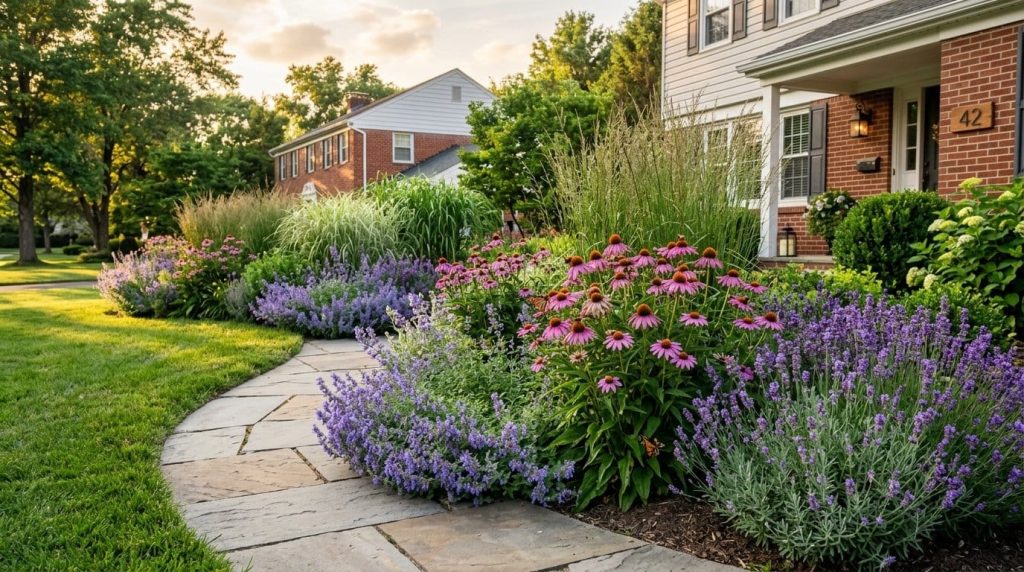
Have you ever wondered why some plants seem to thrive in Eastern Washington while others struggle, especially through the first hot summer?
Actually, the hot, dry summers, limited rainfall, and often alkaline or disturbed soils of Eastern Washington create very different gardening conditions.
But here’s the good news. You don’t have to fight the climate to have an attractive yard. There are lots of native plants that are already adapted to the region’s conditions and can bring flowers, grasses, shrubs, wildlife value, and seasonal interest to a home landscape.
From bluebunch wheatgrass and arrowleaf balsamroot to rabbitbrush and native penstemons, there are plenty of choices beyond a traditional lawn. The trick is choosing plants that fit both Eastern Washington and the specific conditions of your yard.
Best Native Plants for Eastern Washington
There is a surprising thing about native plants of Eastern Washington. There are hundreds of native plant species, but not all of them are equally useful in a residential landscape.
So, if you’re looking for a native plant list for arid climate conditions, Eastern Washington offers plenty of excellent choices.
-
Bluebunch Wheatgrass
Pseudoroegneria spicata
For a grass that feels right at home in Eastern Washington, bluebunch wheatgrass is tough to top. As one of the defining bunchgrasses of the region’s dry landscapes, it grows in neat, upright clumps rather than spreading like a typical lawn grass.
It’s a natural fit for naturalistic plantings, native borders, rock gardens, and low-water landscapes, and its seed heads add a graceful touch of movement and texture as they rise above the foliage.
Quick facts
- Type: Native perennial bunchgrass
- Height: About 1–3 feet
- Sun: Full sun
- Water: Low once established
- Best for: Dry borders, native gardens, naturalistic landscapes
- Landscape value: Upright form, fine texture, strong Eastern Washington character
The Washington Native Plant Society lists bluebunch wheatgrass at approximately 1–3 feet tall and notes its preference for sunny locations.
-
Idaho Fescue
Festuca idahoensis
Idaho fescue features a softer appearance than bluebunch wheatgrass. Its dense clumps of blue-green foliage can give a native planting a more refined appearance, making it an ideal choice for homeowners who want a water-wise landscape without an overly wild look.
It can be planted in groups or combined with flowering perennials such as penstemon and balsamroot.
Quick facts
- Type: Native bunchgrass
- Height: About 1–2 feet
- Sun: Full sun to partial shade
- Water: Low, although it generally prefers more moisture than some dryland grasses
- Best for: Borders, mixed native beds, naturalistic plantings
- Landscape value: Fine texture and attractive blue-green foliage
The Washington Native Plant Society lists Idaho fescue at 1–2 feet tall and notes that it can tolerate some partial shade and generally likes more moisture than some other Eastern Washington bunchgrasses.
-
Arrowleaf Balsamroot
Balsamorhiza sagittata
Arrowleaf balsamroot has a way of making an Eastern Washington yard feel truly tied to its surroundings. In spring, its bold yellow flowers rise above distinctive gray-green foliage, making a striking visual statement.
This isn’t a plant meant to be crowded into a small bedding display — give it room to spread out, and it can easily become the centerpiece of a native planting.
Quick facts
- Type: Native flowering perennial
- Flower color: Yellow
- Sun: Full sun
- Water: Low once established
- Best for: Native beds, pollinator gardens, naturalistic plantings
- Landscape value: Large flowers and distinctive foliage
Arrowleaf balsamroot is included on the City of Richland’s drought-tolerant/native plant list and is identified as a sun-loving native perennial.
-
Penstemon
Penstemon spp.
Penstemon is one of the best choices when you want flowers without turning your low-water landscape into a high-water garden.
There are hundreds of penstemon species available, with differences in flower color, size, and growing conditions. Their tubular flowers add vertical interest among grasses and other low-growing plants and can provide valuable resources for pollinators.
Quick facts
- Type: Native flowering perennial
- Flower color: Varies by species
- Sun: Generally full sun
- Water: Varies by species; many are well suited to dry conditions
- Best for: Flower beds, rock gardens, pollinator plantings
- Landscape value: Color, vertical form, pollinator value
Several penstemon species appear on the Washington Department of Fish & Wildlife’s Eastern Washington native plant list.
For a residential landscape, choosing the right species is more important than simply buying any plant labeled “penstemon.”
-
Buckwheat
Eriogonum spp.
Native buckwheats are especially well suited to dry landscapes, bringing a distinctive low-growing form to a native garden. Their flowers and foliage add welcome variation when planted alongside bunchgrasses and larger shrubs.
Keep in mind that “buckwheat” covers a fairly diverse group — different species vary quite a bit in size and growing requirements.
Quick facts
- Type: Native flowering perennial
- Size: Varies considerably by species
- Sun: Generally full sun
- Water: Often low
- Best for: Rock gardens, dry beds, pollinator plantings
- Landscape value: Low-water structure, flowers, texture
The Washington Department of Fish & Wildlife’s Eastern Washington list includes several native buckwheats, including James buckwheat and short-stem buckwheat.
-
Yarrow
Achillea millefolium
Yarrow is a good example of a native plant that can add a softer, more garden-like appearance to a dry landscape.
Its finely divided foliage creates a delicate texture, while clusters of small flowers rise above the leaves. It can be used among grasses, along pathways, or in mixed native flower beds.
Quick facts
- Type: Native flowering perennial
- Height: Varies by variety and conditions
- Flower color: Usually white to pinkish
- Sun: Full sun to partial shade
- Water: Low once established
- Best for: Pollinator gardens, mixed beds, naturalistic plantings
- Landscape value: Fine foliage and long-lasting flower clusters
Yarrow is included among Washington native plants recommended for wildlife habitat by WDFW.
-
Rabbitbrush
Chrysothamnus and Ericameria spp.
Rabbitbrush is one of the classic shrubs of Eastern Washington’s dry country. Its yellow flowers bring a welcome burst of late-season color, while its woody form gives the landscape lasting structure.
It really shines when paired with low-water native shrubs and grasses and flowering perennials, so rather than planting a single rabbitbrush on its own, consider working it into a layered native planting.
Quick facts
- Type: Native shrub
- Flower color: Yellow
- Sun: Full sun
- Water: Low once established
- Best for: Dry landscapes, wildlife plantings, naturalistic beds
- Landscape value: Late-season flowers, shrub structure, regional character
Rabbitbrush is well suited to the dry conditions associated with Eastern Washington and is also recognized for its value to pollinators.
-
Big Sagebrush
Artemisia tridentata
Big sagebrush may be one of the most recognizable plants associated with the shrub-steppe landscapes of Eastern Washington. Its gray-green foliage and distinctive fragrance immediately give a planting a more natural regional character.
But sagebrush isn’t necessarily the right plant for every suburban flower bed.
It can become a substantial shrub, and its appearance is much more naturalistic than many conventional ornamental plants. It is best used when the landscape is intentionally designed around native or shrub-steppe character and has enough room for the plant to develop.
Quick facts
- Type: Native evergreen shrub
- Foliage: Gray-green and aromatic
- Sun: Full sun
- Water: Very low once established
- Best for: Large native beds, naturalistic landscapes, shrub-steppe-inspired designs
- Landscape value: Strong regional character and year-round structure
This is a good reminder that “drought tolerant” isn’t the only consideration when choosing plants. Mature size, appearance, and how a plant fits the overall design matter too.
-
Serviceberry
Amelanchier alnifolia
Serviceberry is a particularly useful choice when you want a native plant that can play a more conventional landscaping role.
It can grow as a large shrub or small tree, produces white spring flowers, develops berry-like fruit, and can provide fall color. That combination gives it several seasons of interest.
Quick facts
- Type: Native shrub or small tree
- Typical size: About 10–12 feet tall and up to 20 feet wide
- Sun: Sun to partial shade
- Water: Low, but may need watering during prolonged dry periods
- Best for: Structure, screening, wildlife habitat
- Landscape value: Flowers, fruit, fall color, multi-season interest
WSU’s regional guidance lists serviceberry at approximately 10–12 feet tall and up to 20 feet wide and describes it as low water, while noting that it may need watering during dry spells.
That makes it a good example of why a native plant shouldn’t automatically be treated as completely maintenance-free.
-
Golden Currant
Ribes aureum
Golden currant is another native shrub worth considering for an Eastern Washington yard. It produces yellow flowers in spring and can provide fruit and cover for wildlife.
Its shrub form also makes it useful when designing a native planting that needs more structure than grasses and perennials can provide.
Quick facts
- Type: Native deciduous shrub
- Flowers: Yellow
- Sun: Sun to partial shade
- Water: Depends on site and establishment
- Best for: Mixed shrub beds, wildlife gardens, naturalistic landscapes
- Landscape value: Flowers, fruit, structure, habitat
Golden currant is included in WDFW’s native plant resources for wildlife habitat.
How to Choose Native Plants for Your Eastern Washington Yard?
The right native plants can make a big difference in how well your yard handles Eastern Washington’s hot, dry conditions.
Before choosing plants, consider a few basic factors:
-
Sun:
Check whether the area gets full sun, partial shade, or shade.
-
Soil:
Consider your soil type, including whether it’s sandy, clay-heavy, or compacted.
-
Water:
Group plants with similar water needs together.
-
Drainage:
Choose plants that can handle how quickly or slowly your soil drains.
-
Mature size:
Check the plant’s full height and spread before planting.
-
Purpose:
Think about whether you want grasses, flowers, shrubs, privacy, pollinator habitat, or year-round interest.
Difference Between Native Plants and Drought-Tolerant Plants Richland WA
For an Eastern Washington yard, the two qualities can work together: choosing native plants that are also drought tolerant can help create a landscape that fits the local environment while using less water.
| Native Plants | Drought-Tolerant Plants |
| Naturally occur in the region | Can come from many regions |
| Adapted to local conditions | Selected for their ability to handle dry conditions |
| Can support local wildlife | Chosen for water efficiency |
| Many are low-water once established | Water needs vary by species |
Mistakes to Avoid Before Choosing Native Plants for Your Yard
Choosing native plants for Eastern Washington isn’t simply about picking species that grow in the region. A few common mistakes can lead to extra watering, poor growth, or more maintenance than expected.
- Choosing plants based only on appearance: A beautiful plant may not be suited to your yard’s soil, sunlight, or moisture conditions.
- Assuming every native plant is drought tolerant: Native species have different water requirements, especially during establishment.
- Ignoring mature size: Give plants enough room to reach their natural height and spread.
- Planting without checking drainage: Some natives prefer dry, well-drained soil, while others tolerate more moisture.
- Overlooking sunlight: Make sure the plant’s light requirements match the location where you plan to grow it.
Common Questions Homeowners Ask About Native Plants
-
What are the best native plants for Eastern Washington?
Bluebunch wheatgrass, Idaho fescue, arrowleaf balsamroot, penstemon, buckwheat, rabbitbrush, and sagebrush are good options for many Eastern Washington yards.
-
Are native plants drought tolerant?
Many Eastern Washington natives are well adapted to hot, dry conditions and can require less supplemental water once established.
-
Do native plants require maintenance?
Yes, especially during establishment. However, choosing plants suited to your site can reduce watering, pruning, and other ongoing maintenance.
-
Can I use native plants in a landscaped yard?
Absolutely. Native grasses, flowers, shrubs, and trees can be combined to create attractive, functional residential landscapes.
-
When is the best time to plant native plants?
Fall is often a good time to plant native species in Eastern Washington, giving roots time to establish before the heat of summer.
Bottom Line
The right native plants can help you create a beautiful Eastern Washington yard that uses less water and requires less ongoing care. The key is choosing plants that match your soil, sunlight, drainage, and site conditions.
At Native Plant Landscaping & Restoration, we use our knowledge of Eastern Washington’s native plants, climate, and growing conditions to help homeowners and property owners design and create practical, attractive, water-wise landscapes that are built to thrive here.